×

The Standard e-Paper
Kenya's Bold Newspaper





Audio By Vocalize
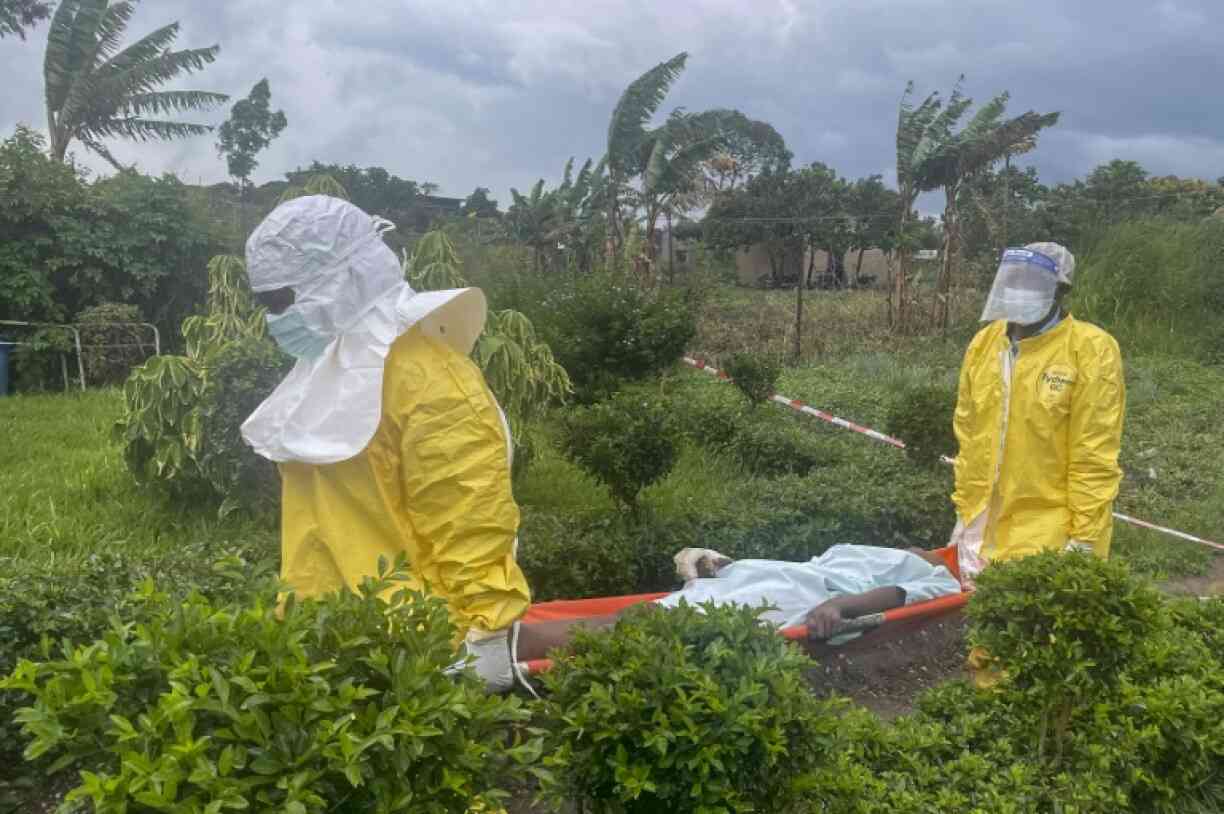
Ebola fears rise as porous borders and weak screening heighten risk of cross-border spread into Kenya. [AFP]
Despite urge by the World Health Organization (WHO) to countries neighbouring Uganda and Democratic Republic of the Congo (DRC) to take quick action to counter Ebola virus, Kenyans are defying the controls.
Seemingly, unaware of the deadly risk posed by the viral disease.
This is even as Bundibugyo strain spreading in DRC and Uganda reporting suspected 220 deaths, with more than 900 cases.
Addressing Africa CDC on Monday, WHO Director General Dr Tedros Adhanom said the cases are spreading rapidly, with assessment upgrading it from high to ‘very high’.
Yet, an investigation by The Standard has established that residents living along the Kenya-Uganda border are bypassing official screening procedures by using illegal entry points, raising fears of a possible spillover of the deadly virus into the country.
This is happening despite heightened surveillance and strict screening protocols put in place by authorities, exposing glaring loopholes that could undermine Kenya’s preparedness efforts.
Individuals are reportedly bypassing official immigration points through porous routes, and stretches of no-man’s land, avoiding mandatory public health screening.
A number of individuals defying the measures cross over to Uganda for businesses, whereas others cross to meet their families and friends, and visit to entertainment joints.
The risky crossings are happening even as Kenya remains among 10 African countries listed by Africa CDC as high-risk for Ebola transmission because of trade, transport and migration links with affected countries.
At official border points, health officers have intensified screening measures in line with guidelines by WHO and Kenya’s Ministry of Health.
Travellers entering the country undergo temperature checks and are required to provide travel and health history details.
Individuals presenting symptoms such as fever, vomiting or unusually high body temperatures are isolated for further assessment and testing.
On the other hand, long-distance truck drivers and passengers arriving from Uganda and the DRC are also subjected to screening at designated checkpoints along the border.
Public health officials have additionally installed hand-washing stations at entry points to help curb infections, as Ebola spreads through direct contact with bodily fluids of an infected person.
Experts have warned that lack of stringent measures, weakens the effectiveness of the surveillance system, putting Kenya at risk of importing Ebola cases, especially in border towns.
Prof Julius Oyugi said travels across highly affected countries poses a major threat, as individuals who are not infected could contract the virus and travel to Kenya with it.
“Ebola cannot reach Kenya except through travel,” said Prof Oyugi, a virologist.
Oyugi explained that the virus was first reported in the DRC before spilling over into Uganda through travellers arriving from DRC.
This movement, he emphasised, places Kenya among the high-risk countries, as listed by Africa CDC.
To prevent cases from reaching Kenya, the virologist said “the government must strengthen precautionary measures and closely monitor people with a travel history from affected areas”.
Screening he said should not only be conducted at border points, but also at airports where travellers from the DRC and Uganda land.
Screening at the border, according to Oyugi may also not be effective, because it is difficult to immediately detect infected individuals, especially at asymptomatic stage.
Ebola symptoms take between two and 21 days to appear, with signs including high fever, severe weakness and fatigue, headache, muscle and joint pains, sore throat.
Other symptoms include vomiting, diarrhoea, abdominal pain and unexplained bleeding or bruising.
At the same time, Oyugi said it would be impossible to quarantine all travellers entering Kenya from Uganda and the DRC.
Instead, the researcher recommended that authorities at points of entry collect detailed travel histories from individuals arriving from affected regions in Uganda and the DRC, track their destinations, and monitor their movements until they are confirmed negative of the disease.
Additionally, the researcher stressed on the need for the government to intensify public awareness campaigns on Ebola.
“Kenya has never had Ebola outbreak, so people do not know how the disease presents. Ebola kills at least 30 to 50 percent of those it infected. It is very lethal,” said Oyugi.
Contacted, Busia health executive Arthur Odera admitted the boarder is porous because border crossings is not limited to official crossing in Busia and Malaba.
“People cross the boarder all over. While crossing the boarder and give them information on how to detect symptoms, and where to run to, for healthcare,” said Odera.
Busia county, he added is working with Kenya Red Cross Society and other partners to intensify prevention measures.
Kenya has not reported a case, and to avoid a spill, Ministry of Health through the Kenya National Public Health Institute (KNPH) has activated a robust multi-sectoral preparedness and response framework.
This entails activation of incident management system to coordinate national preparedness and response activities in collaboration with counties and partners.
Also, activation of public health emergency operations centres at national and county levels has been done, according to Health Cabinet Secretary Aden Duale.
On Monday, during Ebola briefing chaired by Africa CDC, intense population movement, insecurity, porous boarders and active trade corridors is a was listed as major hitches in containing the disease.
According to Africa CDC, outbreak of the Bundibugyo strain is the second largest Ebola outbreak after West Africa in 2014.
The strain unlike Ebola Zaire does not have vaccines, neither drugs for treatment.
Individuals who contract the disease are isolated, according to scientists and healthcare providers.
Other than isolation, health workers manage symptoms of infected individuals like fever, muscle pain, diarrhoea and vomiting because of lack of anti-viral drug.
“It is worrying that on onset of outbreak, there is no therapeutic or vaccines,” regretted South Africa President Cyril Ramaphosa.
Ramaphosa said Africa CDC is working closer with WHO Gavi, the Vaccine Alliance and partners towards chemical trials, aimed at developing vaccine for the Ebola strain.
“Africa cannot face this outbreak without diagnostic tools and treatments,” said Ramaphosa.
The sentiments were echoed by Africa CDC Director General Dr Jean Kaseya, who said vaccine
In a separate Ebola Briefying by WHO held on Friday last week, WHO chief scientist Dr Sylvie Briand, maintained vaccines are key in containing the disease.
Briand said current available vaccines were licensed for the dominant strain of Ebola Zaire, that has less protection for Bundibugyo strain in circulation.
However, she said it might take six to nine months to develop a vaccine because of characteristics of the Ebola strain, and available products.
"Vaccine is important tool is a key tool. Tracing all contacts and working closer with communities to stop chain of transmission and practice safe burial. By treating patients, it'll reduce viral load it'll reduce risks of spread, " said Dr Briand.
She added, "When you respond to outbreak, you need a combination of tools, and response that include community protection and access to care and surveillance system to trace where transmission is taking place".
The outbreak was first reported in DRC, and so far, the disease has spread to Mongbwalu, Rwanpara and Bunia in Ituri Province, and Butembo and Goma in North Kivu.
In Uganda, at least seven cases have been reported.
To break the chain of transmission of the strain, all flights from Bunya, were also suspended, with movement restricted to highly affected regions.
According to WHO, in Ituri province, the epicentre of the outbreak, nearly five million people live amid ongoing conflict.
The authority also banned huge gathering and masses, but this is yet to be effectively effected.
Locals are also reported to continue defying protocols in handling of the dead, risking infections.
For example, last week, irate young stormed and torched a health centre demanding release of a body of a young man who was reported to have died of Ebola.
Even with escalated surveillance, local health officials have warned of escalating cases.
According to local health workers, there is lack of communication- people are yet to accept their loved ones die of Ebola.
Also, they do not believe Ebola exists.
Kaseya said outbreak of the Bundibugyo strain poses a high risk, as compared to previous outbreaks.
Subscribe to our newsletter and stay updated on the latest developments and special offers!